You or someone using this computer or device previously created Trip Plans.
What should we do with these plans?
Make these Trip Plans part of my account
Discard these Trip Plans
Login
Some text here
Password Reset
Please enter the email you used to set up your account.
We'll send a link to use to reset your password.
Check Your Email
If there is an account with the email address , we will send you a link to reset your password
Moose Season Is Upon Us: Everything you need to know about finding moose this summer
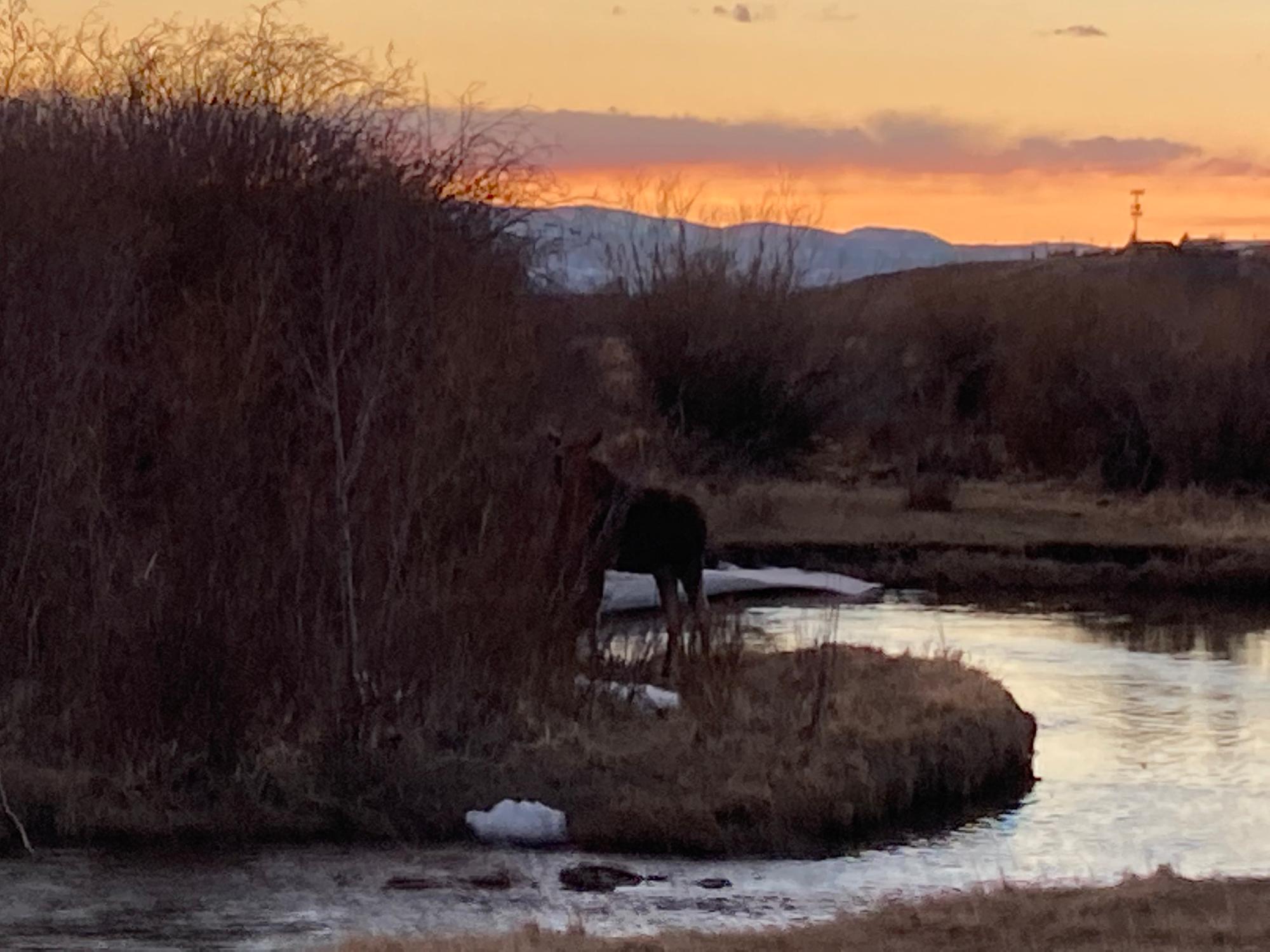
In case you didn’t already know, North Park is the Moose Viewing Capitol of Colorado. Our largest and most famous residents have been thrilling visitors and locals alike for going on fifty years now. This year, the moose viewing season has started early with the exceptionally mild winter weather. Already, moose have been sighted around Walden, CO. If you want to get a jump start on your wildlife viewing adventures, North Park is the best place in Colorado to find moose.
Our Favorite Ice Age Era Deer
Moose are the largest living members of the deer family, and you might call us biased, but they are also the best. Weighing upwards of 1200 pounds, moose tower over their cousins, the mule deer and white tailed deer. Moose also have some of the fastest growing antlers out there as their large paddle-like antlers begin regrowing in spring and drop once again in early winter. Some research attributes their aggressive and defensive personalities of the males to how quickly they regrow antlers, which are used in foraging, fending off predators, and competing for mates during the rut.
The bulls—what male moose are called—don’t have the corner on being overprotective either. Female moose (cows) are extremely territorial of their personal space and will aggressively defend their calves. It’s not uncommon for moose to give birth to multiple calves, so your odds of seeing more than one newly born calf in one place are very good.
Moose are a remnant of ice age megafauna that roamed the northern hemisphere when much of the landmass of Asia, Europe, and North America were covered with sheet ice for tens of thousands of years. Today, moose still live in Scandinavia, Russia, and North America. They are foragers, living on greens such as aquatic grasses, leaves, and willow bark. Due to the analgesic effects of compounds found in red willow, moose might prefer this food source as a way to fight the pain of their quickly growing antlers.
During the ice age, moose survived encounters with predators that make our apex hunters look tame in comparison. Dire wolves, saber-toothed cats, American lions, and short-faced bears all predated on moose during the Pleistocene, which more than likely contributed to the very niche survival instincts in moose. Unfortunately, another veteran of the ice age proved to be the most deadly as moose were largely hunted out in most areas of the United States by human beings during the last two hundred years.
Where Did the Moose Come From?
Overhunting and habitat changes due to farming, ranching, and the fur trade eradicated nearly all moose from Colorado. In the 1970s, reintroduction began with a few mating pairs of moose from Wyoming and Utah. North Park proved to be an ideal location due to its isolation and plentiful wetlands and public lands that would allow moose to roam freely.
Reintroduction continued throughout the 1980s and 90s with a lot of success, and soon, North Park moose were being captured and released to other areas for reintroduction. To this day, the benefits of their impact on their place in the ecosystem is still being studied. They have become so abundant in Colorado that a few lucky hunters every year can apply for the moose tag draw during hunting season. (The draw begins April 1, so any hunters out there interested in hunting in North Park need to check out theColorado Parks and Wildlife site to get started).
For local residents of Jackson County, seeing a moose might be an every day event. It’s not unusual to see one lounging in someone’s front yard, browsing for new buds on the trees in Hanson Park, or sauntering across Main Street.
When and Where to Find Moose
The best time of year to see moose in Jackson County usually begins in mid-spring. As the mountain snowpack begins to melt and grasses and trees begin to green up in the valley, moose come down from the protection of the pine forests to open pastures. They are on the move, grazing on green spring shoots and willows that grow along the rivers in our wetlands.
The best times of day to see moose in the open are typically early in the morning and in the evening around dusk. Due to their dark coloring and our high-altitude sun, moose tend to overheat in direct sunlight, so most take shelter in the shade of trees and willow stands. But don’t be too surprised if you see them out in the open throughout the summer, spring, and early fall.
How to Spot a Moose
The first time you see a moose, you might have thought you have seen a horse or a cow, but their silhouette is very distinctive. Tall legs, large ears, and a characteristic bell that hangs down below their chin is a sure sign you’ve spotted a moose. Some moose have light colored legs, but mostly their large bodies are a deep brown to black color. Males have antlers which are covered in velvet until growth stops during the rut and the protective sheath of fur and skin falls away to reveal the bone-like hard tissue underneath.
As far as where you will find moose in North Park, the answer is pretty much everywhere! Moose are very mobile and easily step over fences to go wherever they please to get to their favorite food. This is why you might see a moose kicking back in someone’s yard or roaming across an open field or munching on duckweed in a mountain pond. Moose habitat is just about everywhere in North Park, from parks and alleys in Walden to lakes and hayfields and forests anywhere else.
Hundreds of moose currently live in North Park. They are very shy creatures, preferring to be somewhat solitary. Males will often group together in bachelor herds whereas cows with young will tend to stick with only their offspring. Their abundance and versatility of habitat is why Jackson County is one of the best places to see moose in Colorado.
Important Things to Know About Moose Safety
Moose didn’t make it this long by being pushovers. They have survived predators that humans only remember in their worst nightmares. They will fiercely defend their personal space if they feel threatened, which includes you, your pets, your car, and even strongly worded letters. Moose will often trample first and ask questions later. Use the rule of thumb when encountering a moose. Hold up your thumb at arms length. If you can’t cover up the moose with your thumb, you are too close. The same principle was developed with nuclear weapons testing in the 1950s. It is slightly more useful when it comes to moose.
A tell-tale sign of a cranky moose is of course their dark brown coloring and general moose shape. Beyond that, they might stand aggressively with the fur above their shoulders bristling. Moose have been known to stamp, kick, and attempt to gore cars that annoy them. They regularly trample tourists who try to take selfies with them. They are probably less responsive to “making yourself look big” than grizzly bears. Unlike a brown bear, a moose running towards you is not bluffing. They can run about as fast as a racehorse—even in snow!
Tips for Moose Safety
It’s best to just maintain your distance and don’t approach them. Keep your pets on a leash no longer than 6ft. If you encounter an aggressive moose in the wild, your best bet for survival is to put something immovable between yourself and this goofy looking animal that can take on a wolf pack and win. Put things like trees, boulders, or parked cars between you and the angry moose. Do not taunt the moose. It will only make it angry. You really don’t want that.
If you have to go from Point A to Point B and a moose is blocking your path, C your way to another way to go and avoid the moose completely. Do not attempt to feed a moose. Never try to ride one. Do not ask a moose if you can use the aux cord to play your sweet playlist.
Also, it is worth mentioning that moose are very good swimmers and can hold their breath and dive up to 30ft deep to graze on the bottom of lakes and ponds. They are not very good tree climbers, so you’ve got that going for you at least. If you are close to a moose, remain calm and back away slowly as long as they aren’t showing signs of aggression.
In all seriousness, approaching moose can be considered harassment of wildlife and get you a steep fine from CPW. In a worst-case scenario, an encounter with a moose could put you in the hospital, or even kill you.
Spooking a moose might cause them to run away, but moose often break legs or run through barbed wire fences if they are trying to escape. A broken leg for a moose is a death sentence, so please be considerate of wildlife. You are visitors to their space after all.
Make a Weekend of Your Moose Viewing!
We want you to enjoy your moose viewing experience on your visit to Jackson County as much as possible. Staying safe is a very important part, but don’t be too discouraged by how intimidating moose can seem. For the most part they are shy creatures that keep to themselves. They roam in and out of yards without much hassle to residents in Walden all the time. They are impressive animals that deserve your respect and protection. Estes Park might have its resident herd of elk, but North Park has its moose, and hundreds of them.
So if you are just passing through on the Cache La Poudre-North Park Scenic Byway or if you are making a weekend trip to see some wildlife, hike some trails, or check out whatever event is happening in Walden, we hope you get to see a moose on your visit. Why not make a whole weekend out of the trip and stay for a few days?
Places to Stay
Book a hotel,VRBO, orAirBnB vacation rental property and make it a weekend photo trip. Check out this article onrental cabins, or these articles on theOld Homestead andPowderhorn Cabins for some ideas on some truly unique and iconic North Park places tostay.
To be right in the heart of moose country, book a reservation withYonder Yurts in the Colorado State Forest State Park.22 West will put you within striking distance of the Park Range via Rainbow Lakes Trails. Also the proprietors of 22 West run an animal rehabilitation facility, which often cares for injured or orphaned moose!
It’s never too early to start daydreaming about planning your next adventure in North Park. Jackson County is Colorado’s best kept secret when it comes to outdoor activities, fishing, and wildlife watching. Whether it is hiking, climbing, mountain biking, or just taking a long drive to pass the weekend away from the city, add the Walden, CO area to your itinerary of places to discover the real Colorado. And leave the crowds behind.
Let’s Get Social!
You’ve already found theVisitNorthParkCO.com site. If you like what you’ve seen subscribe to the Visit North Park Newsletter and follow us on social media on Facebook orInstagram, for regular updates of events, stunning photos, and historical tidbits. Make North Park your new favorite place in Colorado!